Return to Where? Reflections on AVRR of Afghan Migrants from Iran
Return is not only a geographical movement from one country to another; it is a complex social and economic process. This article reflects on the experiences of Afghan migrants returning from Iran and explores whether return can be sustainable without considering the future conditions of returnees in their destination communities.
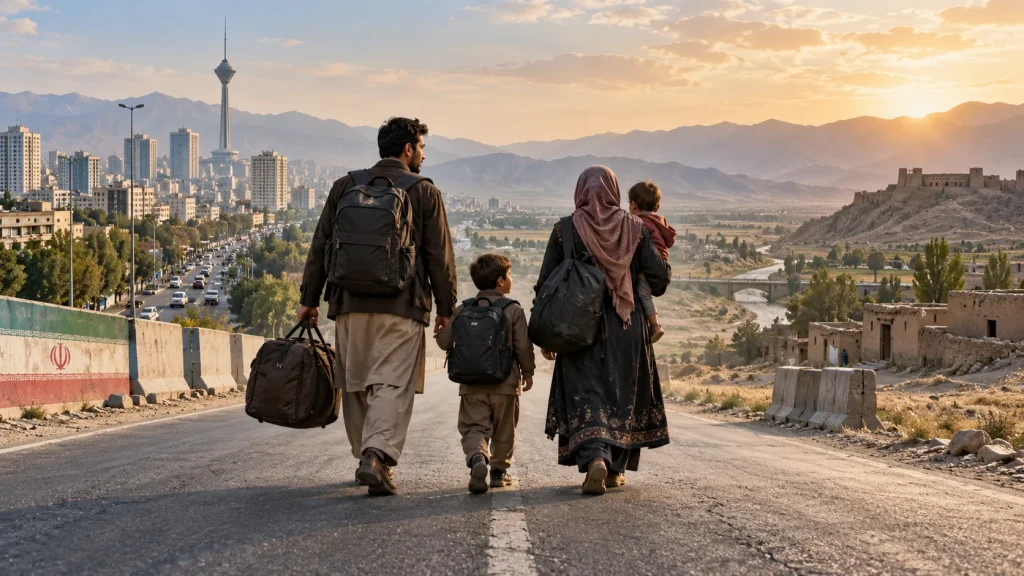
Return migration is often considered the final stage of the migration journey. However, real experiences show that return is not necessarily the end of migration; rather, it can be the beginning of a new and complex phase of life.
A migrant who returns after years of living in a host country does not only cross a geographical border. They must rebuild their economic position, social connections, and sense of belonging in an environment that may no longer be the same as the one they left behind.
The experience of Afghan migrants in Iran shows that return decisions are not made under the same conditions for everyone. In recent years, the situation of Afghan migrants in Iran has been influenced by changing social, economic, and political circumstances. While there have been periods in which opportunities for residence and adaptation were relatively more available, other periods have been accompanied by increased pressures related to legal status, migration controls, and return processes.
The escalation of tensions between Iran and Israel in 2025 was also followed by reports of increased pressure on Afghan migrants and wider return movements. These developments highlight that return decisions cannot be understood separately from the environment in which migrants make their choices.
At the same time, conditions in the destination country also influence perceptions of return. Following the political changes in Afghanistan in 2021 and the return of the Taliban to power, many migrants reassessed the possibility of returning. For some, economic and social concerns made return more difficult, while for others, family ties, investment opportunities, or existing networks continued to make return a possible option.
Therefore, return should not be understood only as a relationship between migrants and host countries. It is the result of interaction between three factors: conditions in the host country, the individual situation of migrants, and the capacity of destination communities.
Assisted Voluntary Return and Reintegration (AVRR) programs have been developed to support safe, dignified, and informed return processes. These programs play an important role in reducing the challenges associated with return and supporting migrants in rebuilding their lives.
However, experiences of return suggest that the process does not end when a person arrives in their country of origin. A more important question is what happens after return and whether the destination environment provides realistic opportunities for rebuilding a life.
Based on exploratory conversations with Afghan returnees from Iran, return does not have a single meaning for everyone. For some migrants, particularly those with financial resources, skills, or economic networks in Afghanistan, return can represent a planned decision to transfer resources, establish businesses, or reconnect with their communities.
For others, especially low-income migrants, return may occur when their available choices become increasingly limited due to economic pressures, uncertainty regarding legal status, or fear of forced removal. This does not necessarily reject the concept of voluntary return, but it highlights the importance of understanding return decisions within their broader social and economic context.
One of the key challenges is that return is sometimes viewed mainly as a geographical movement. However, for migrants, return is a social and economic process. A person may return to Afghanistan but still face difficulties such as unemployment, limited access to services, weak social networks, or inability to use their skills effectively.
Therefore, sustainable return requires moving from managing the movement of people toward designing pathways for a new start. Each returnee has different circumstances, including skills, work experience, financial resources, family conditions, and destination locations.
Digital platforms can play a complementary role in strengthening this process. They cannot replace formal AVRR programs, but they can support migrants by providing access to return experiences, destination information, skill assessment, and personalized guidance before and after return.
Platforms such as Hoda can contribute as an empowerment layer by helping migrants better understand their options, learn from others’ experiences, and develop a clearer picture of their possible future after return.
Ultimately, the main question about return may not be:
- “Did the person return?”
but rather:
- “Was the person able to rebuild a life after returning?”
A sustainable return requires a connection between individual decisions, destination capacities, and realistic opportunities for a new beginning.